Article

Packed Cell Volume vs. Hematocrit: What They Actually Measure
The terms packed cell volume (PCV) and hematocrit (HCT) are often used interchangeably. While the two are closely related, the methods used to obtain them can be different, which means the results from the same blood sample are not always interchangeable. For veterinary practices running spun PCV and human laboratories using it as a backup […]
Read More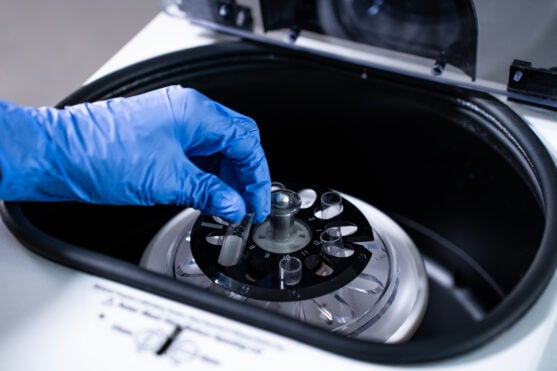
Blood Bank Centrifuge: Requirements, Speeds, and What Makes Them Different
A blood bank centrifuge plays a very specific role in the laboratory. Unlike the centrifuges used to separate donated blood into components, a blood bank centrifuge is designed for the short, controlled spins used in serological testing. Also called a serology or serological centrifuge, this type of centrifuge is used for applications such as blood […]
Read More
Replacing the Discontinued Drucker 853VES with the DASH 12
The Model 853VES has become a reliable part of many routine laboratory workflows, but with the model now discontinued, it might be time to consider a replacement. Drucker Diagnostics’ DASH 12 STAT centrifuge provides a familiar starting point, with added speed and RCF capabilities. For 853VES units equipped with either 12-place horizontal rotor, the DASH […]
Read More
What to Know When Replacing an 853VES 20-Place Rotor
When a laboratory’s 853VES reaches the end of its service life, replacing it is an opportunity to look at which parts of the existing workflow need to stay the same and which can change. For labs using the 20-place fixed-angle rotor, the right replacement depends on factors such as tube size, capacity, required RCF, and […]
Read More
Replacing the Drucker 853VES 6-Place 50 mL Rotor with the HORIZON 24
The Model 853VES has been a familiar part of many laboratory workflows, but with the model now discontinued, laboratories using the 6-place 50 mL fixed-angle rotor may be considering what to use next. The HORIZON 24 provides a current option for this setup, maintaining the 6 × 50 mL capacity and 2,000 xg maximum RCF […]
Read More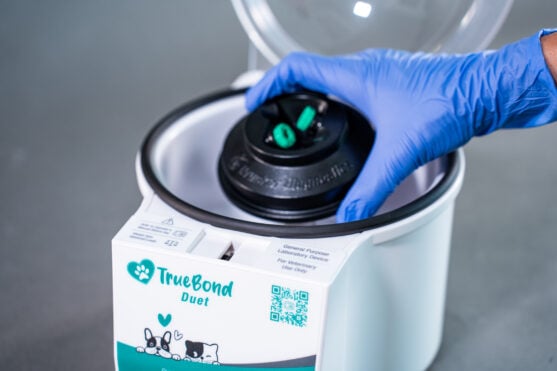
Replacing the StatSpin® VT with the TrueBond Duet
StatSpin products are no longer available for purchase, and manufacturer support is being phased out. Practices still relying on the now-discontinued StatSpin® VT will need to find a replacement before their current unit reaches end of service. Continuing to run unsupported equipment increases the risk of unavailable parts and repair delays that can affect sample […]
Read More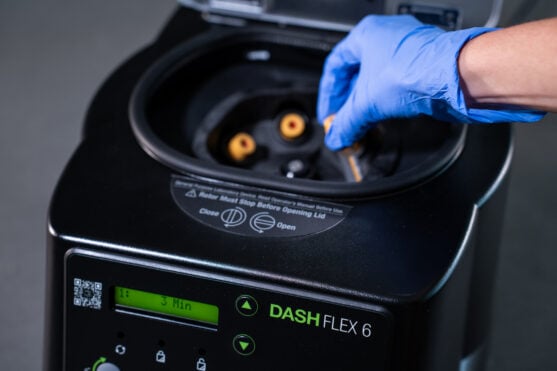
Replacing the StatSpin® Express 4 with the DASH Flex 6
StatSpin products are no longer available for purchase, and manufacturer support for them is being phased out. Clinical labs still operating a StatSpin® Express 4 will need to find a replacement before their current unit reaches end of service. Continuing to run unsupported equipment increases the risk of unavailable parts and repair delays that can […]
Read More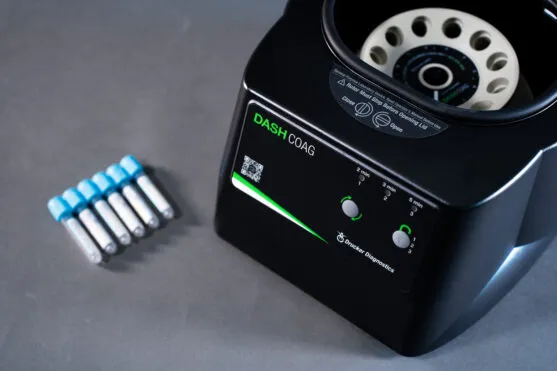
Replacing the StatSpin® Express 3 with the DASH Coag
Labs that rely on a StatSpin Express 3 for coagulation testing are using a centrifuge that can no longer be purchased or supported. As parts become more difficult to source and manufacturer support is phased out, the chance of extended downtime increases, along with the delays that follow when a STAT unit is out of […]
Read More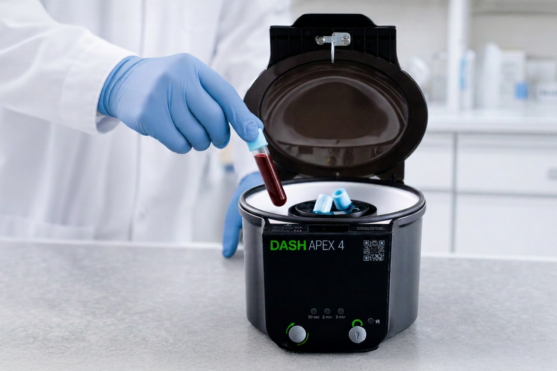
Replacing the StatSpin® Express 2 with the DASH Apex 4
StatSpin products are no longer available for purchase, which means clinical labs still operating a StatSpin® Express 2 will need to find a replacement before their current unit reaches end of service. Continuing to operate an unsupported centrifuge increases the risk of unexpected repairs, unavailable parts, or workflow disruptions that can affect sample processing and […]
Read More