
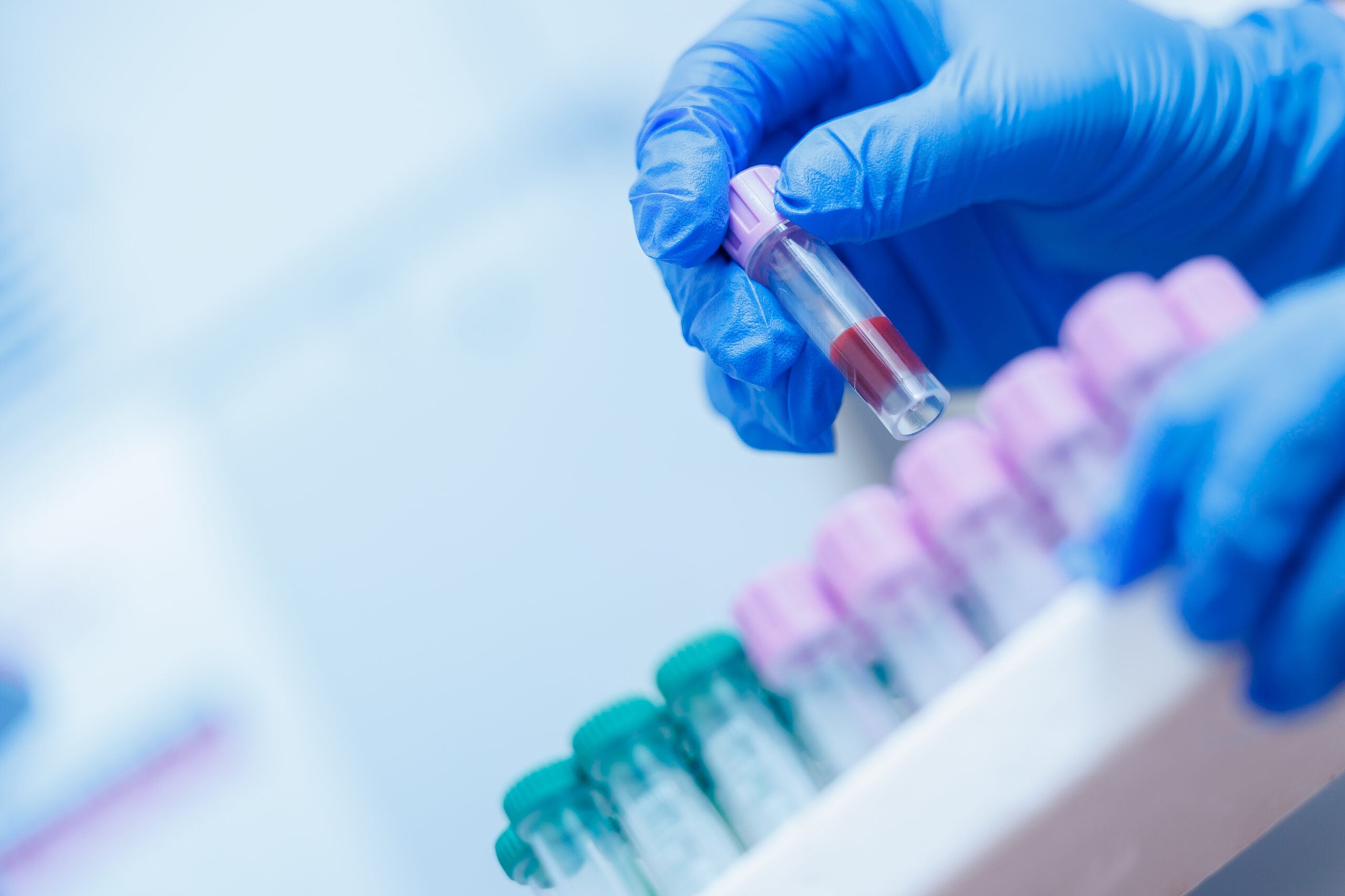
 Veterinary clinic lab work, gloved hands handling sample vials.
What the Growth of Veterinary Hematology Means for In-House Lab Equipment
Published August 12, 2026In-house veterinary diagnostics are getting faster. A new generation of AI-driven hematology analyzers can now result a complete blood count in minutes, and that speed is changing expectations for the whole lab. While those analyzers run on whole blood and do not require a spun sample, chemistry, immunoassay, urine, and fecal testing all rely on a veterinary centrifuge. When the analyzers speed up and patient volume climbs, an older or undersized centrifuge can become a bottleneck.
This is a workflow question before it is a purchasing one. The goal here is to explain what the shift toward faster hematology means for the rest of the equipment on the bench, and how to keep the slowest step from becoming the centrifuge.
What is changing: faster, AI-driven in-house hematology
Zoetis launched the Vetscan OptiCell at VMX in January of 2025, where it was positioned as the first cartridge-based, AI-powered veterinary hematology analyzer. According to Zoetis, it pairs viscoelastic focusing with trained AI algorithms to run a CBC and return accurate insights in minutes.[1] Their goal is to compress the hematology step, both the hands-on time and the wait, so results are ready during the visit rather than after it.
Since then, the platform has kept growing. In April of 2026, Zoetis announced an expansion that adds cellular hemoglobin concentration mean (CHCM) and plateletcrit, bringing the analyzer to 24 parameters and, per that release, bringing reference-lab level CBC insights in-clinic. Both new parameters are expected to be available to users during 2026, so this is an announced capability rather than a confirmed shipped one at the time of writing.[2] The direction is consistent: more of what used to require a wait time to result or a send-out is moving to the point-of-care.
What is not changing: most panels still need a centrifuge
A CBC runs on whole blood, which is why an analyzer processes it without a spin. Nearly everything else on a routine in-house menu cannot. Chemistry and immunoassay panels are run on serum or plasma, which have to be separated from the cellular fraction first, and that separation is the centrifuge’s job. Urine sediment and fecal flotation both depend on centrifugation as well.
When your centrifuge becomes the bottleneck
Throughput is set by the slowest step. As hematology gets faster, the pressure moves downstream. When the hematology analyzer completes a CBC in minutes and patient load is rising, but serum and plasma are still waiting to be centrifuged, the centrifuge can become the new bottleneck. Too few positions or a slow cycle causes samples to queue and gives back the time gained on hematology. The CBC may be ready, but returning to the patient with only a CBC result tells only a portion of the story.
Older equipment can further delay sample preparation. It tends to be less reliable, harder to operate, and more prone to maintenance interruptions and setup errors. In a veterinary practice, the staff running the bench are also managing patients, owners, and other responsibilities outside the lab. Equipment that requires careful manual setup can slow the workflow and introduce run-to-run inconsistency. The constraint is no longer the analyzer. It is the centrifuge.
How to prevent the bottleneck
The practical move is to treat the centrifuge as part of the same upgrade as the analyzers, not a separate decision made years apart.
Upgrade them together. If a practice is investing in a faster hematology analyzer, that is the moment to check whether the centrifuge can match the new pace and workflow in the lab. Matching the capacity of both at once avoids buying speed on one side of the bench and leaving a bottleneck on the other.
Choose one unit that spins multiple sample types. A centrifuge that handles microhematocrit, blood tubes, urine, and fecal preparations in a single unit covers the full in-house menu without swapping equipment between tasks, which protects both counter space and throughput.
Prioritize ready-to-use simplicity. A centrifuge with straightforward presets and minimal manual setup lowers the chance of user error and keeps results consistent from one operator to the next. Simple operation can help reduce training time and improve workflow consistency.
Frequently Asked Questions
How is AI changing in-house veterinary lab testing?
AI-driven analyzers such as the Vetscan OptiCell now run a complete blood count in minutes by pairing viscoelastic focusing with trained algorithms, and newer parameters like CHCM are bringing measurements that were once limited to reference labs into the clinic. The result is faster hematology and higher expectations for turnaround across the whole in-house menu, which raises the bar for the equipment that runs the other panels such as chemistry and immunoassay.
Do I still need a centrifuge if I have an in-house CBC analyzer?
Yes. A CBC runs on whole blood and does not require spinning, but chemistry, immunoassay, urine, and fecal testing all do. Chemistry and immunoassay panels need serum or plasma separated from cells first, and urine and fecal float tests rely on spinning to concentrate the sample or debris. A faster hematology analyzer may shorten CBC turnaround time, but it does not remove the need to prepare the samples for the rest of the lab.
What veterinary centrifuge keeps up with a busy in-house lab?
One with enough capacity to match the analyzer’s pace and rising caseload, the ability to spin multiple sample types (microhematocrit, blood, urine, and fecal) in a single unit, and a ready-to-use design simple enough for general veterinary staff to run consistently. Reliability and easy service matter too, since an aging centrifuge is a common and avoidable bottleneck.
The dependable in-house choice
Drucker Diagnostics builds veterinary centrifuges around exactly this workflow. The ready-to-use design keeps operation simple for general practice staff, the multi-sample capacity covers microhematocrit, blood, urine, and fecal work in one unit, and domestic manufacturing supports the reliability and service a busy practice depends on. When the hematology analyzer speeds up, a centrifuge built for the same tempo keeps the rest of the bench moving with it.
For help matching a centrifuge to a faster in-house lab, see Drucker’s veterinary centrifuge selection guide.
Sources
- Zoetis. “Zoetis Announces Global Launch of Vetscan OptiCell at VMX 2025.” January 2025. https://news.zoetis.com/press-releases/press-release-details/2024/Zoetis-Announces-Global-Launch-of-Vetscan-OptiCell-at-VMX-2025-2024-QuLricO56V/default.aspx
- Zoetis. “Zoetis Expands Vetscan OptiCell Capabilities…” April 21, 2026. https://news.zoetis.com/press-releases/press-release-details/2026/Zoetis-Expands-Vetscan-OptiCell-Capabilities-Becoming-the-First-and-Only-Point-of-Care-Hematology-Analyzer-to-Offer-Cellular-Hemoglobin-Concentration-Mean-2026-0Y06C02UfA/default.aspx