
Guide
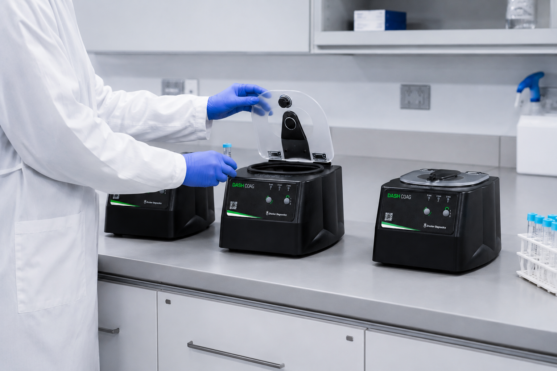
Optimize Your Coagulation Workflow with the Right Centrifuge Setup
Purchasing a new coagulation analyzer? Consider pairing it with a centrifuge array to streamline your workflow right from the start. The correct setup can significantly reduce turnaround times, eliminate manual batching, and keep specimens moving even during peak volume periods. At Drucker Diagnostics, we’ve designed our centrifuges specifically for coagulation workflows. Here’s how to find […]
Read More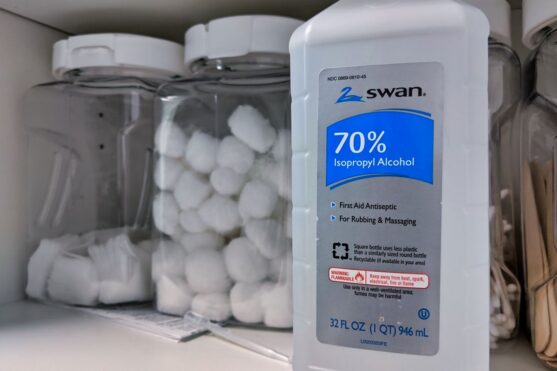
Centrifuge Cleaning and Disinfection: What Your Lab Needs to Know
A centrifuge is one of the hardest-working pieces of equipment in a clinical lab and one of the most overlooked when it comes to routine maintenance. Regular cleaning and disinfection isn’t just good practice. It directly affects centrifuge longevity, sample integrity, and the safety of everyone in the lab. This article covers why centrifuge cleaning […]
Read More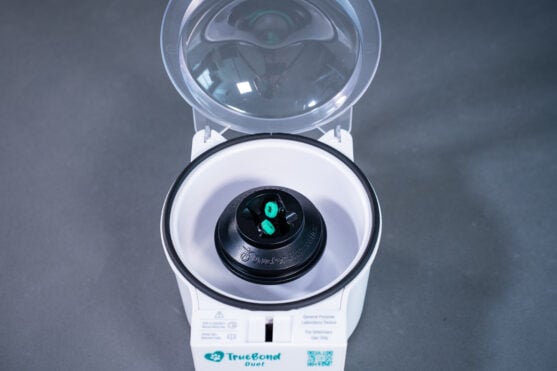
How to Install the TrueBond Duet Fixed Angle Rotor
Veterinary labs handle a wide range of tests every day, from blood chemistry and urine sediment to microhematocrit tubes and more. The TrueBond Duet animal health centrifuge is designed to spin it all in one ultra-compact unit that weighs just 5.7 lbs and fits in the palm of your hand. With two swappable rotors included […]
Read More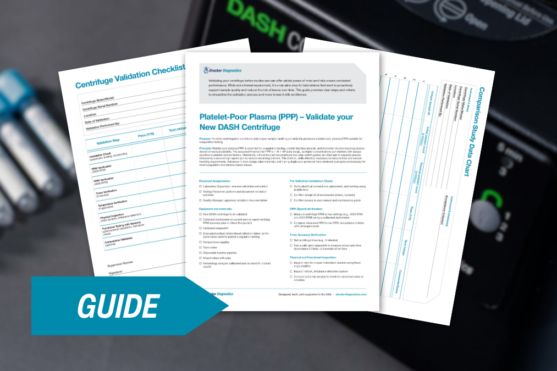
Platelet-Poor Plasma (PPP): Validate Your New DASH Centrifuge
This study compares two centrifuges, the Drucker Diagnostics DASH-4 and Beckman Coulter StatSpin® Express 2, for preparing platelet-poor plasma (PPP), which is essential for accurate diagnostic testing. Centrifugation is a critical step in stabilizing blood samples, and the quality of PPP directly impacts diagnostic accuracy.
Read More
What Centrifuge Accessories Do I Need—And When Should I Replace Them?
Centrifuge accessories don’t get much attention until something goes wrong. But carriers, adapters, inserts, and rotors are the components that actually hold your samples during centrifugation—and worn or mismatched accessories are one of the most common causes of tube breakage, poor separation, and unnecessary vibration. This guide walks through each accessory category so you know […]
Read More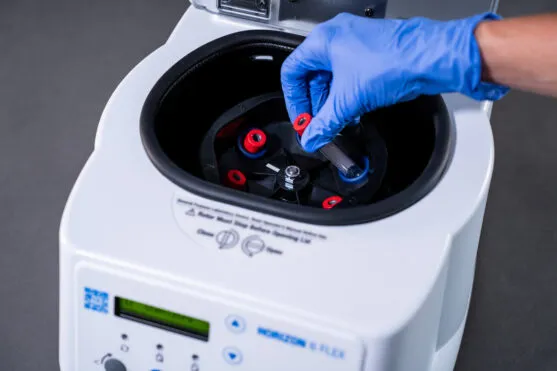
How to Balance a Centrifuge Correctly
Balancing a centrifuge protects your samples, staff, and equipment. Poorly balanced loads create vibration, noise, and mechanical stress that turn routine runs into safety and quality problems. This guide provides a precise, repeatable process for clinical labs, veterinary practices, and regenerative medicine clinics. TLDR Summary: Inspect rotor and tubes before every run for damage or […]
Read More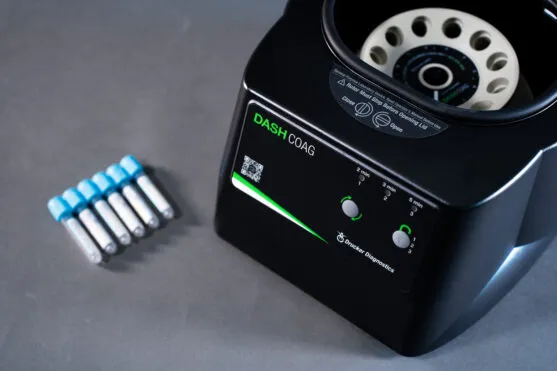
How Centrifugation Impacts Coagulation Testing
Coagulation tests guide critical decisions about bleeding disorders, anticoagulant dosing, and surgical risk. The accuracy of PT, APTT, and fibrinogen measurements depends on proper sample preparation, and centrifugation is the step where most errors occur. This guide explains how centrifugation variables affect coagulation results and which protocols deliver reliable outcomes. TLDR Why does centrifugation matter […]
Read More
How to Calculate G-Force (RCF): Centrifuge Formula & Calculator Guide
Accurate centrifugation starts with setting the correct g-force. This value — also called relative centrifugal force, or RCF — determines how much force is applied to your samples during spinning and directly affects separation quality, sample integrity, and downstream testing accuracy. Most tube manufacturers specify a required g-force in their instructions for use (IFU), so […]
Read More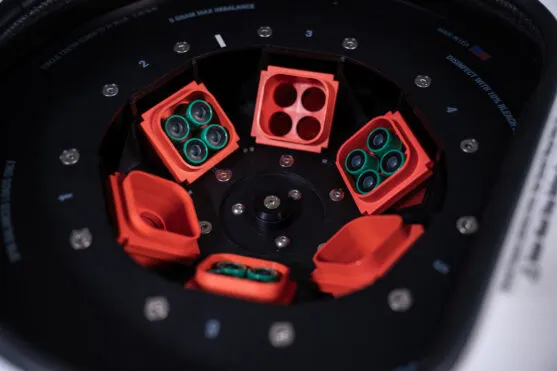
Rotor Care 101: How to Extend the Life of Your Centrifuge Rotor
Your centrifuge rotor is one of the most expensive components in your laboratory, with costs ranging from $1,000 to $15,000 depending on the type. Yet most labs replace rotors prematurely—not from wear, but from preventable corrosion and damage caused by poor maintenance habits. With proper care, a rotor that might fail in 3-5 years can […]
Read More