
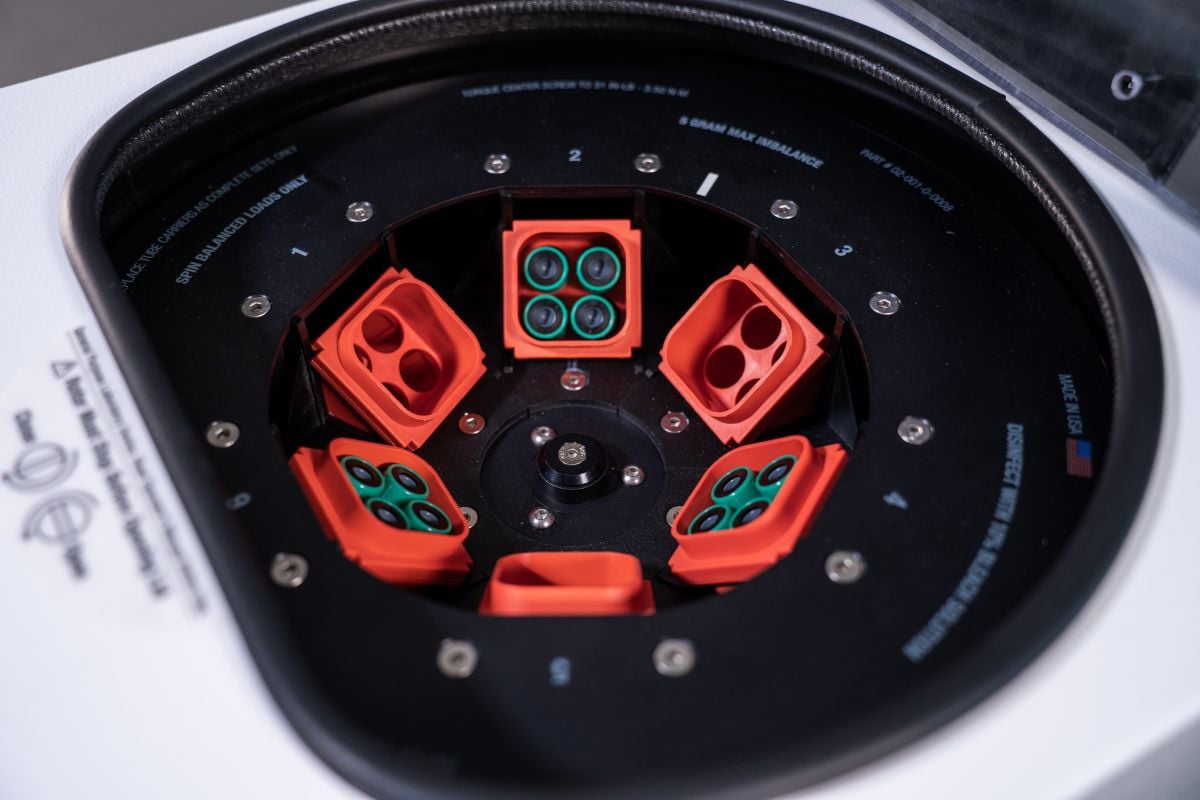
What to Know When Replacing an 853VES 20-Place Rotor
Published September 16, 2026When a laboratory’s 853VES reaches the end of its service life, replacing it is an opportunity to look at which parts of the existing workflow need to stay the same and which can change. For labs using the 20-place fixed-angle rotor, the right replacement depends on factors such as tube size, capacity, required RCF, and whether fixed-angle centrifugation is essential to the application.
Drucker Diagnostics offers several current centrifuges that can serve as a replacement depending on those requirements. The HORIZON 24 maintains 125 mm tube compatibility and a maximum RCF of 2,000 xg while moving to horizontal centrifugation. The HORIZON 6 Flex FA keeps the fixed-angle rotor and 125 mm tube compatibility, but with a smaller capacity and slightly lower maximum RCF. For fixed-angle coagulation and PPP applications, the DASH Coag provides another option with higher RCF and capacity for up to 12 tubes.
Which Centrifuge Replaces the 853VES 20-Place Fixed-Angle Rotor?
The Model 853VES with its 20-place fixed-angle rotor is discontinued, but several current Drucker centrifuges can address different requirements of the original setup.
The HORIZON 24 is the closest match for laboratories that need 125 mm tube compatibility and a maximum RCF of 2,000 xg. It accommodates up to 24 tubes measuring up to 16 x 100 mm or 12 tubes measuring up to 16 x 125 mm. The main change is the move from fixed-angle to horizontal centrifugation.
The HORIZON 6 Flex FA is an option for laboratories that need to retain fixed-angle centrifugation and 125 mm tube compatibility. It accommodates up to 6 tubes, reaches speeds up to 3,900 RPM, and produces up to 1,850 xg.
The DASH Coag is another fixed-angle option for laboratories processing coagulation or PPP samples. It accommodates up to 12 tubes measuring up to 16 x 100 mm or 10 mL, reaches 6,600 RPM, and produces up to 4,400 xg.
Before switching, compare the RCF required by current procedures, sample type, rotor orientation, tube dimensions, capacity, and saved programs. These factors will help determine which current centrifuge best fits the workflow.
When Should I Repair or Replace?
A discontinued centrifuge does not necessarily need to be replaced simply because it is no longer in production. If an 853VES is still reliable, serviceable, and meeting the laboratory’s needs, continuing to use it may make sense.
Replacement becomes more worth considering when:
- Parts or service are becoming difficult to obtain
- Reliability is declining
- Repairs are becoming more frequent
- Laboratory needs have changed
For laboratories deciding whether to continue maintaining an existing 853VES or move to a current model, the condition of the centrifuge and the requirements of the procedures should both be considered.
RCF vs. RPM: What Changes When Switching Centrifuges?
One of the most important considerations when transferring centrifugation protocols is the difference between RPM and RCF.
When transferring a protocol to a new centrifuge, match the required RCF rather than simply transferring the RPM setting. RPM describes how quickly the rotor spins, while RCF, or relative centrifugal force, describes the force applied to the sample. Because RCF depends on the radius of the rotor, two centrifuges running at the same RPM can produce different forces.
The relationship between RCF and RPM is:
RCF = 1.118 × 10⁻⁵ × r × RPM²
In this equation, r represents the radius in centimeters from the center of the rotor to the sample.
For the 853VES 20-place fixed-angle rotor, the maximum RCF varies with tube length:
- 125 mm tubes: 4,000 RPM = 2,000 xg
- 100 mm tubes: 4,000 RPM = 1,900 xg
- 75 mm tubes: 4,000 RPM = 1,700 xg
The current replacement options have different rotor characteristics:
- HORIZON 24: 3,400 RPM = 2,000 xg
- HORIZON 6 Flex FA: 3,900 RPM = 1,850 xg
- DASH Coag: 6,600 RPM = 4,400 xg with tubes up to 100 mm
This means an RPM setting from the 853VES should not simply be entered into a replacement centrifuge. Instead, use the required RCF and the new centrifuge’s rotor radius to determine the appropriate RPM.
For example, if a procedure requires 1,500 xg with 125 mm tubes, the corresponding RPM on the HORIZON 24 or HORIZON 6 Flex FA should be calculated using the rotor characteristics of the new centrifuge.
A slight decrease in RCF may still work for some applications, but the effect of changing the centrifuge should be established through comparative validation against a validated centrifuge to ensure patient results are not affected.
853VES vs. HORIZON 24 and HORIZON 6 Flex FA
The best replacement depends on which characteristics of the 853VES are most important to preserve. The HORIZON 24 maintains the 2,000 xg maximum and 125 mm tube compatibility while increasing capacity for shorter tubes, while the HORIZON 6 Flex FA preserves fixed-angle centrifugation.
|
Category |
853VES 20-Place Rotor |
HORIZON 24 |
HORIZON 6 Flex FA |
|
Rotor |
Fixed angle |
Horizontal |
Fixed angle |
|
Capacity |
20 tubes |
24 × 100 mm / 12 × 125 mm |
6 tubes |
|
Tube size |
Up to 17 × 125 mm or 15 mL |
Up to 16 × 125 mm or 15 mL |
Up to 16 × 125 mm or 15 mL |
|
Maximum speed |
4,000 RPM |
3,400 RPM |
3,900 RPM |
|
Maximum RCF |
1,700 xg (75 mm) |
2,000 xg |
1,850 xg |
|
Saved programs |
Up to 10 |
Up to 10 |
Up to 10 |
Tube Compatibility
Tube dimensions are an important consideration when replacing an older centrifuge. The 853VES 20-place rotor accommodates tubes up to 17 × 125 mm or 15 mL.
Both the HORIZON 24 and HORIZON 6 Flex FA support tubes up to 16 × 125 mm or 15 mL, so laboratories should confirm the dimensions of the tubes currently used before switching.
The HORIZON 24 also provides greater capacity when using shorter tubes, holding up to 24 tubes measuring 100 mm or 12 tubes measuring 125 mm.
Rotor Orientation
The rotor design is another key difference between the available options.
The 853VES 20-place rotor and HORIZON 6 Flex FA both use fixed-angle centrifugation. The HORIZON 24 uses a horizontal rotor, which changes how tubes are positioned during centrifugation.
If a procedure specifically requires fixed-angle centrifugation, the HORIZON 6 Flex FA or DASH Coag may be more appropriate options to evaluate. If horizontal separation is acceptable, the HORIZON 24 provides a higher-capacity option.
Programmable Cycles
The 853VES can store up to 10 programs. The HORIZON 24 and HORIZON 6 Flex FA also support up to 10 saved programs, making it possible to recreate frequently used cycle parameters on either model.
The DASH Coag provides three adjustable preset cycles for coagulation applications.
Questions to Ask Before Upgrading
Before replacing an 853VES, review the centrifuge and procedures currently in use. A few questions can help determine which current model is the right fit:
- Which 853VES rotor is being used? The replacement should be evaluated based on the specific rotor and application, not just the centrifuge model.
- What tube sizes are used? Confirm that the replacement accommodates the dimensions of the tubes used in current procedures.
- How many tubes are processed per run? Compare current throughput with the capacity of each replacement option.
- What RCF is required? Match the required xg rather than simply transferring the old RPM setting.
- Is fixed-angle centrifugation required? If so, consider models that retain a fixed-angle rotor.
- Which saved programs need to move over? Review the time, speed, and other cycle parameters used in current procedures.
- Are new carriers or adapters needed? Confirm the accessories required for the selected centrifuge before purchasing.
Answering these questions first can help narrow down the current models that fit the laboratory’s needs.
Choosing a Current Model
Replacing an older 853VES doesn’t have to mean starting over. The HORIZON 24, HORIZON 6 Flex FA, and DASH Coag each preserve different characteristics of the original setup, giving laboratories options based on their current tubes, applications, capacity requirements, and rotor preferences.
For labs looking to maintain 125 mm tube compatibility and 2,000 xg, the HORIZON 24 provides a horizontal option with increased capacity for shorter tubes. The HORIZON 6 Flex FA retains fixed-angle centrifugation and 125 mm tube compatibility, while the DASH Coag provides a higher-RCF fixed-angle option for coagulation and PPP applications using tubes up to 100 mm.
Before making a switch, confirm the required RCF, tube dimensions, capacity, rotor orientation, and saved cycle parameters. Contact Drucker Diagnostics to discuss your current setup and determine which current centrifuge best fits your laboratory’s needs, or take advantage of our risk-free 30-day evaluation program to try one in your lab.