Related Articles & Resources
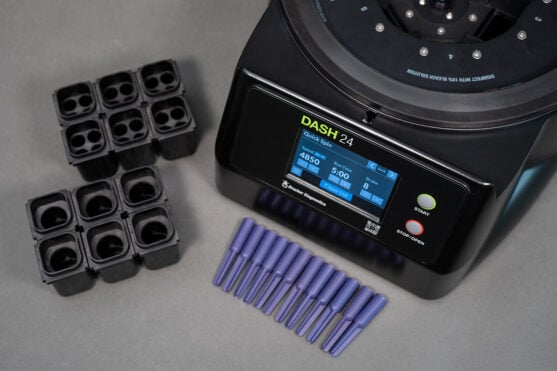
Drucker Diagnostics Launches DASH 24 High-Capacity STAT Centrifuge
New STAT centrifuge offers 24-tube capacity, digital touchscreen, and complete accessory package for high-volume hospital laboratories. PORT MATILDA, PA – MAY 2026 Drucker Diagnostics, one of the world’s leading manufacturers of benchtop clinical centrifuges, is excited to announce the launch of the DASH 24, the most advanced and highest-capacity model in the DASH STAT centrifuge […]
Read More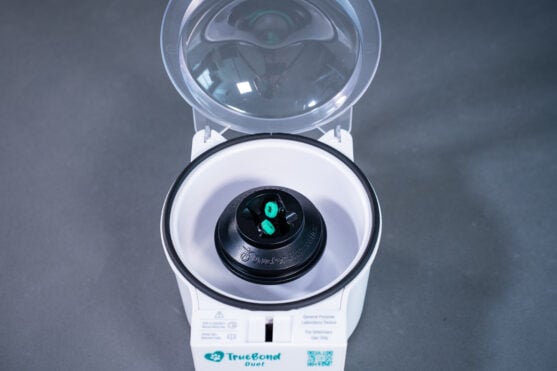
How to Install the TrueBond Duet Fixed Angle Rotor
Veterinary labs handle a wide range of tests every day, from blood chemistry and urine sediment to microhematocrit tubes and more. The TrueBond Duet animal health centrifuge is designed to spin it all in one ultra-compact unit that weighs just 5.7 lbs and fits in the palm of your hand. With two swappable rotors included […]
Read More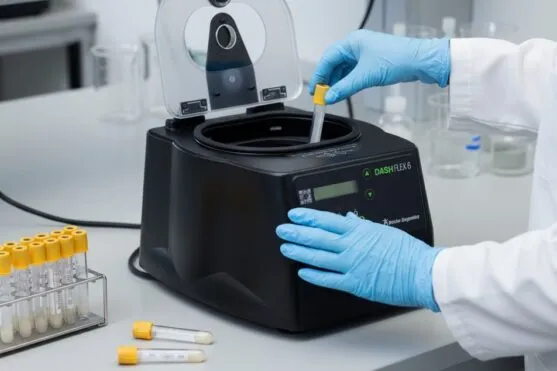
Don’t Get Caught Without Support: Why Labs Are Trading In Unsupported Centrifuges
Equipment reliability starts with manufacturer support. Without it, labs lose access to replacement parts, technical expertise, and the responsive service that prevents minor issues from becoming major disruptions. As support phases out for aging centrifuges, clinical labs and veterinary practices face a choice: continue managing equipment with dwindling resources, or upgrade to a manufacturer committed […]
Read More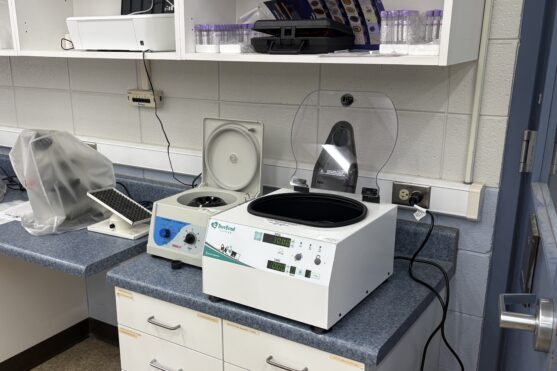
How Tri-County Technical College is Training Future Veterinary Professionals with the TrueBond TriFLEX
For over 45 years, Tri-County Technical College (TCTC) in Pendleton, South Carolina, has been preparing students for rewarding careers in veterinary technology. As the 20th oldest Veterinary Technology program in the nation, TCTC has earned a reputation for excellence, maintaining full accreditation since 1979 and achieving a remarkable 100% VTNE pass rate in 2025 (more […]
Read More
How Centrifuge Reliability Affects Lab Turnaround Time
Turnaround time is one of the most closely watched metrics in clinical laboratory operations. When results are delayed, clinical decisions wait. And while labs often focus on analyzer throughput or staffing to tighten TAT, the centrifuge is frequently the bottleneck. Equipment that runs inconsistently, requires frequent repairs, or forces re-runs doesn’t just slow things down. […]
Read More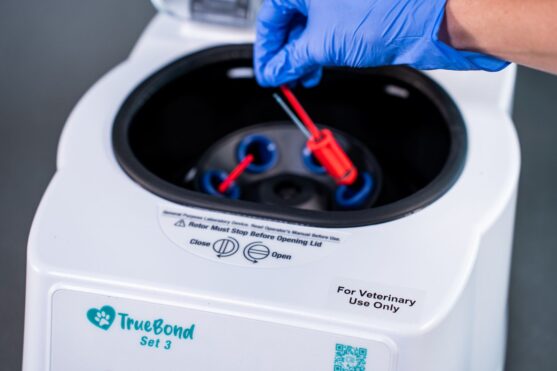
TrueBond vs. LW Scientific E8: Side-by-Side Comparison for Veterinary Labs
If you’re comparing veterinary centrifuges and the LW Scientific E8 is on your shortlist, here’s how it stacks up against TrueBond. The E8 comes in two relevant configurations: Combination Variable Speed and Combination Touch, each with a direct TrueBond counterpart worth evaluating side by side. TLDR Both TrueBond models reach higher max speeds than either […]
Read More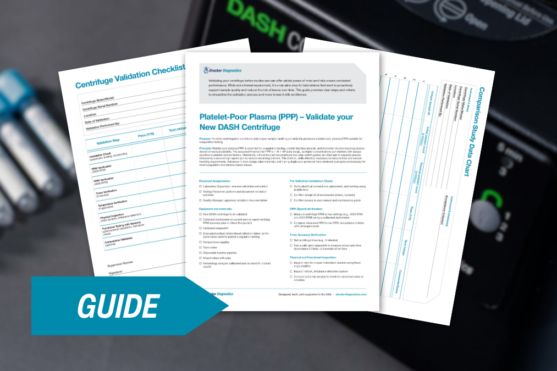
Platelet-Poor Plasma (PPP): Validate Your New DASH Centrifuge
This study compares two centrifuges, the Drucker Diagnostics DASH-4 and Beckman Coulter StatSpin® Express 2, for preparing platelet-poor plasma (PPP), which is essential for accurate diagnostic testing. Centrifugation is a critical step in stabilizing blood samples, and the quality of PPP directly impacts diagnostic accuracy.
Read More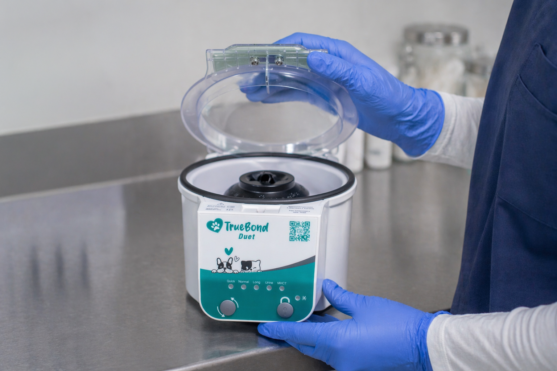
TrueBond Duet vs. StatSpin VT: Which Veterinary Centrifuge Is Right for Your Practice?
If your clinic is evaluating compact, high-speed centrifuges for blood work, hematocrit readings, and urine sediment, the TrueBond Duet and Beckman Coulter StatSpin VT are closely matched on paper. Same speed ceiling. Same rotor configuration. Same number of preset cycles. The differences that matter are in warranty, support, and what happens after the sale. TLDR […]
Read More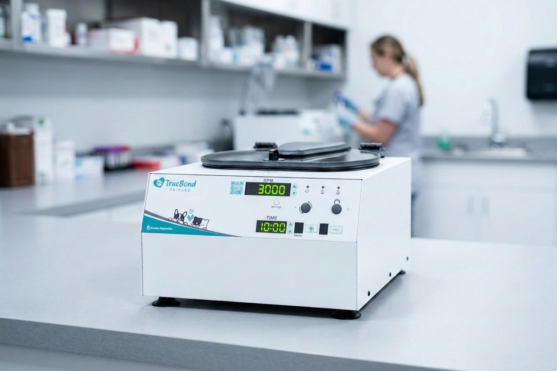
TrueBond TriFLEX vs. Unico PowerSpin DX: Which Veterinary Centrifuge Is Right for Your Clinic?
The TrueBond TriFLEX and Unico PowerSpin DX are horizontal veterinary centrifuges built for routine blood, urine, and fecal processing. They differ substantially in rotor type, tube compatibility, application coverage, and price. Here’s how they compare. TLDR The TrueBond TriFLEX handles the widest tube range (2 mL to 140 mL) and includes microhematocrit capability and all […]
Read More