
Footer Logo Drucker Diagnostics
  • Resources
  • Support
  • Contact
Cart (0)
Search
  • About
  • Solutions
        • clinical centrifuge solutions
        • Clinical Lab

        • Designed to help clinical labs process high volumes of patient samples quickly, accurately, and with fewer interruptions.

          Learn
        • Regenerative Medicine

        • Flexible solutions built to meet the unique needs of wound care, PRP therapy, and more.

          Learn
        • Veterinary Medicine

        • From microhematocrit to fecals, veterinary labs can spin more sample types, all in one centrifuge.

          Learn
  • Products
        • Centrifuges

        • High-performance centrifuges built to streamline every stage of sample processing.

          View
        • Accessories

        • Adapters, inserts, and other accessories to fit your samples and your workflows.

          View
        • Parts

        • Replacement parts designed in-house to keep your centrifuge spinning at its best.

          View
  • Services
    • Engineering Services
    • Contract Manufacturing
    • Injection Molding
    • Co-Branding & Custom Labeling
  • Try Risk-Free
Cart (0)
Search
  • About
  • Solutions
    • Clinical Lab
    • Regenerative Medicine
    • Veterinary Medicine
  • Products
    • Centrifuges
    • Accessories
    • Parts Old
  • Services
    • Contract Manufacturing
    • Engineering Services
    • Injection Molding
    • Private Labeling
  • Try Risk-Free
  • Resources
  • Support
  • Contact

Clinical Lab

How Centrifuge Reliability Affects Laboratory Turnaround Time
Article

How Centrifuge Reliability Affects Laboratory Turnaround Time

Turnaround time is one of the most closely watched metrics in clinical laboratory operations. When results are delayed, clinical decisions wait. And while laboratories often focus on analyzer throughput or staffing to tighten TAT, the centrifuge is frequently the bottleneck. Equipment that runs inconsistently, requires frequent repairs, or forces re-runs doesn’t just slow things down. […]

Read More
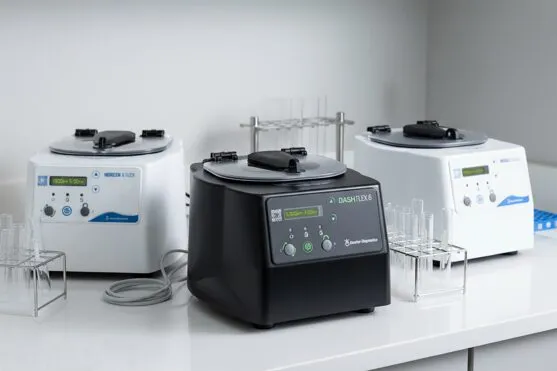
Types of Laboratory Centrifuges Explained
Article

Types of Laboratory Centrifuges Explained

Laboratory managers and technicians often face confusion when selecting centrifuges because manufacturers classify them differently—some by speed, others by size, and still others by application. Understanding these classification systems helps you choose the right centrifuge for your specific workflow. TLDR: Laboratory centrifuges are classified by speed (low-speed up to 5,000 RPM, high-speed 15,000-30,000 RPM, ultracentrifuge […]

Read More
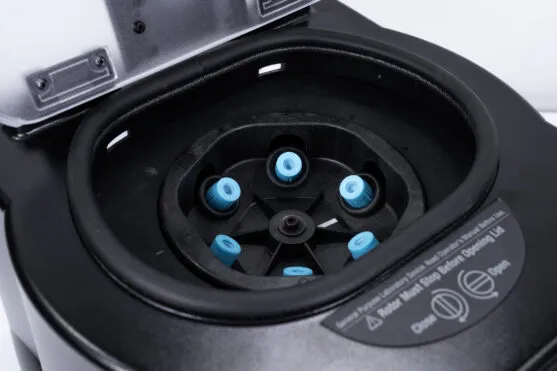
How Many Centrifuges Does Your Laboratory Need? A Capacity Planning Guide
Article

How Many Centrifuges Does Your Laboratory Need? A Capacity Planning Guide

When planning laboratory capacity, one of the most consequential equipment decisions you’ll make is determining centrifuge requirements. Yet most laboratories approach this question backwards—calculating sample volume and then shopping for the largest single centrifuge they can afford, assuming bigger is always better for high-volume operations. TLDR: Determining how many centrifuges your laboratory needs starts with […]

Read More

Blog Categories

  • Clinical Lab
  • Press Release
  • Veterinary
  • Home
  • About
  • Solutions
  • Products
  • Services
  • Resources
  • Support
  • Careers
  • Blog
  • Dry Hematology
  • Privacy Policy
  • Terms of Use
  • ISO/BSI Certificate
Footer Logo Drucker Diagnostics
+1-866-265-1486 (US Toll-Free)

Designed, built and supported in the USA

Copyright 2026 | Drucker Diagnostics

Contact Us Today Try Risk-Free
  • English (United States)