
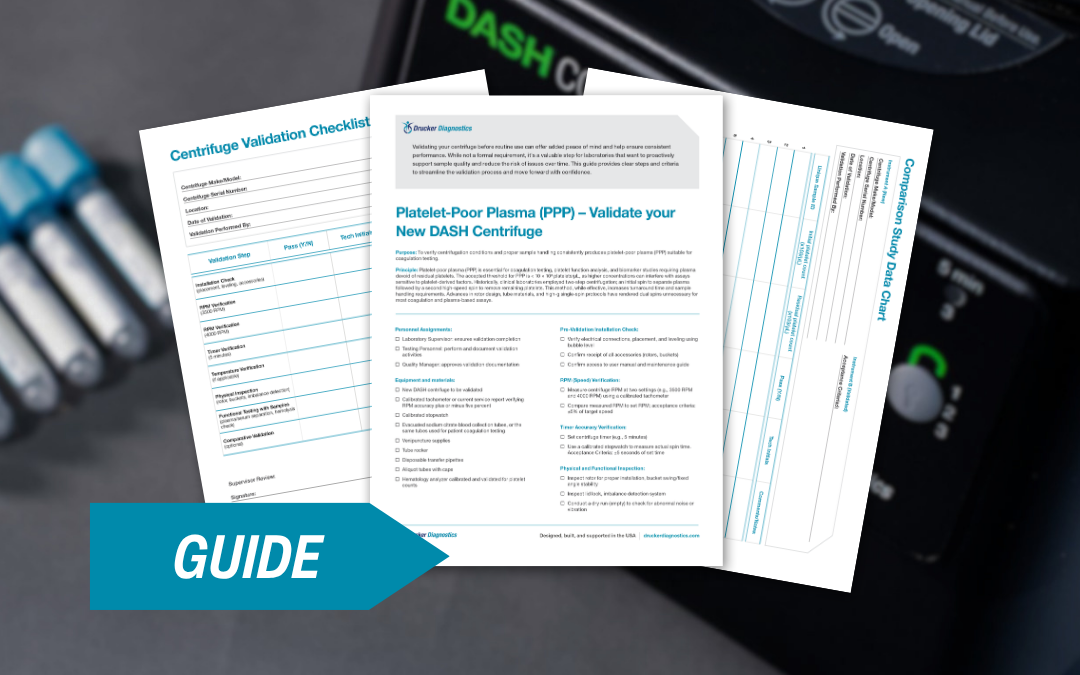
Platelet-Poor Plasma (PPP): Validate Your New DASH Centrifuge
Published April 17, 2026Validating your centrifuge before routine use can offer added peace of mind and help ensure consistent performance. While not a formal requirement, it’s a valuable step for laboratories that want to proactively support sample quality and reduce the risk of issues over time. This guide provides clear steps and criteria to streamline the validation process and move forward with confidence.
Purpose:
To verify centrifugation conditions and proper sample handling consistently produces platelet-poor plasma (PPP) suitable for coagulation testing.
Principle:
Platelet-poor plasma (PPP) is essential for coagulation testing, platelet function analysis, and biomarker studies requiring plasma devoid of residual platelets. The accepted threshold for PPP is < 10 × 10³ platelets/μL, as higher concentrations can interfere with assays sensitive to platelet-derived factors. Historically, clinical laboratories employed two-step centrifugation; an initial spin to separate plasma followed by a second high-speed spin to remove remaining platelets. This method, while effective, increases turnaround time and sample handling requirements. Advances in rotor design, tube materials, and high-g single-spin protocols have rendered dual spins unnecessary for most coagulation and plasma-based assays.
Download the Guide