
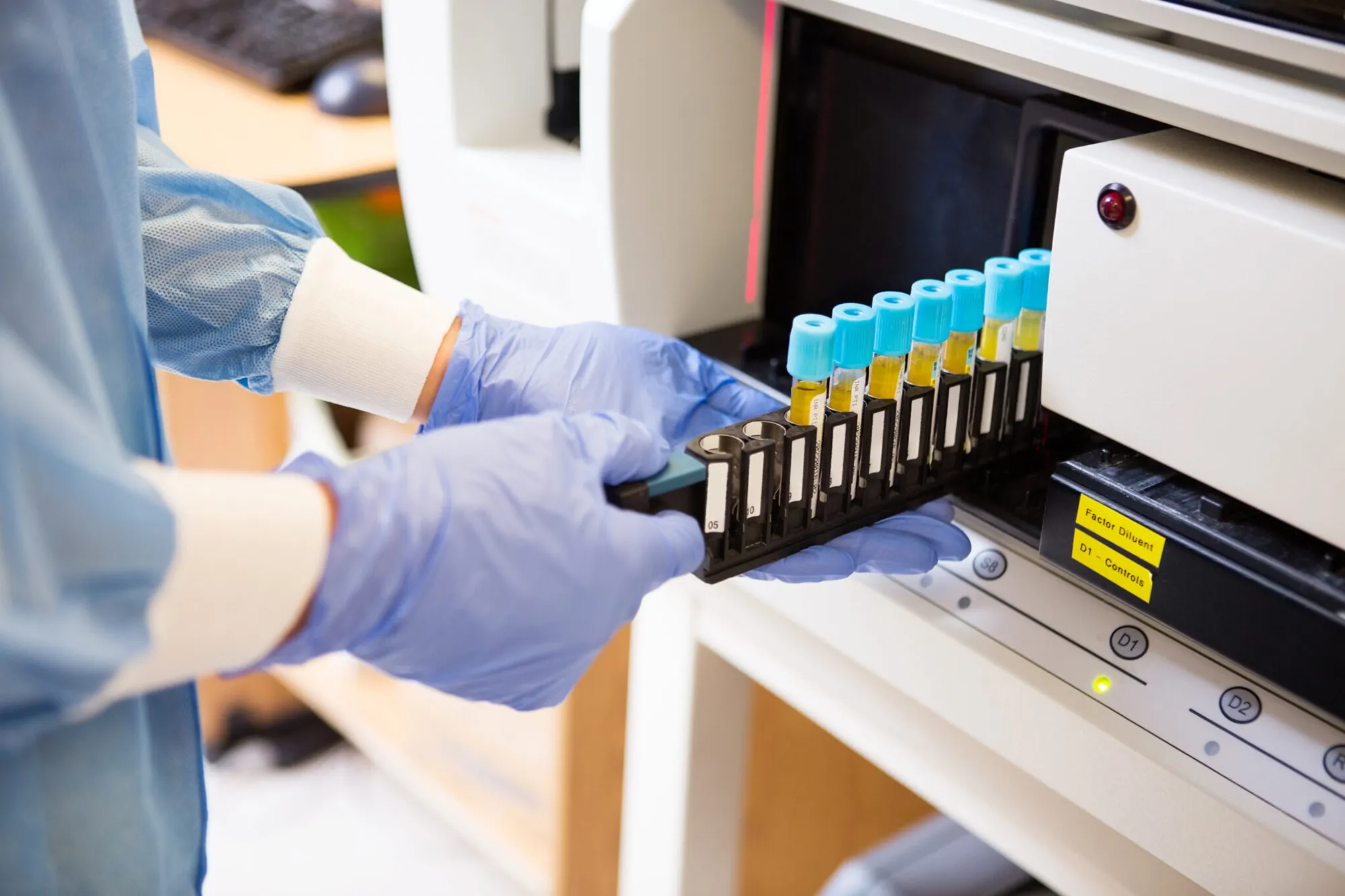
Centrifuge Tube Guide: Types, Sizes, and Selection for Clinical Labs
Published November 18, 2025Selecting the right centrifuge tube for clinical work comes down to three factors: sample volume, application, and what your centrifuge can accommodate. The wrong tube can compromise sample integrity, create safety risks, or produce unreliable results. This guide covers the most common centrifuge tube types used in clinical laboratories, how to match tube size to your application, and when material choice actually matters. For the accessories that hold those tubes in the rotor — adapters, holders, inserts — see our centrifuge accessories buyer’s guide.
TL;DR Summary
- Most clinical tubes need centrifugation: serum separator (SST), plasma separator (PST), heparin, EDTA for certain tests, and urine collection tubes.
- Use polypropylene conical tubes for most clinical work — 15 mL for routine blood and urine, 50 mL for large-volume samples, 0.5–2 mL for molecular applications.
- Always centrifuge at the speed and duration specified in the tube manufacturer’s IFU, and balance opposing tubes within 0.5 grams.
Which tubes need to be centrifuged in a clinical lab?
The short answer: Most tubes used in routine clinical diagnostics require centrifugation — including serum separator tubes (SST), plasma separator tubes (PST), heparin tubes, EDTA tubes for certain applications, and urine collection tubes. The tube type determines how long and at what g-force to spin; always follow the tube manufacturer’s IFU.
For selecting the right centrifuge tube format: use polypropylene conical tubes for the majority of clinical applications — 50 mL for large-volume samples and 15 mL for routine blood work. Micro centrifuge tubes (0.5–2 mL) are best for molecular work and small-volume samples. Glass centrifuge tubes are reserved for applications requiring optical clarity or chemical resistance to solvents that degrade plastic.
TL;DR: Quick Tube Selection Guide
Standard clinical samples:
- 50 ml centrifuge tubes: Large volume samples, multiple aliquots, cell culture work
- 15 ml centrifuge tubes: Routine blood work, urine samples, standard diagnostics
- Conical design: Easier pellet recovery and sample separation
Small volume samples:
- Micro centrifuge tubes: 0.5 ml, 1.5 ml, or 2 ml centrifuge tube sizes
- PCR applications: Specialized PCR tube centrifuge-compatible formats
- Snap-cap or screw-cap options depending on application
Material selection:
- Plastic centrifuge tubes (polypropylene): General purpose, cost-effective, chemical resistant
- Glass centrifuge tubes: High-temperature applications, optical clarity needed, aggressive solvents
Plastic vs. glass centrifuge tubes for clinical use
The overwhelming majority of clinical centrifuge tubes today are plastic — specifically polypropylene — because they’re shatterproof, cost-effective, and chemically resistant to the aqueous solutions that make up most clinical samples. Glass centrifuge tubes still have a role, but it’s a narrow one.
Plastic Centrifuge Tubes (Polypropylene)
Advantages:
- Chemical resistant to most laboratory reagents
- Shatterproof—safer for high-speed centrifugation
- Disposable and cost-effective for single-use applications
- Available in all standard sizes with graduated markings
- Autoclavable (for most polypropylene formulations). Max RCF ratings vary by tube manufacturer — always check your tube’s specification against your centrifuge’s maximum. Clinical benchtop units like Drucker’s 642E clinical centrifuge publish compatible tube sizes in the product specifications.
Best for:
- Routine blood sample processing
- General clinical diagnostics
- High-volume testing environments
- Applications where breakage risk is a concern
Glass Centrifuge Tubes
Advantages:
- Superior optical clarity for visual inspection
- Better resistance to certain aggressive chemicals and solvents
- Can withstand higher sterilization temperatures
- Reusable with proper cleaning protocols
- Inert surface minimizes sample interaction
Best for:
- Applications requiring visual clarity (microscopy, color assessment)
- Samples containing organic solvents that may affect plastic
- High-temperature sterilization requirements
- Specialized chemical applications
Important note: Glass centrifuge tubes require careful balancing and are more prone to breakage during high-speed centrifugation. Many labs have transitioned to plastic for safety reasons.
What size centrifuge tube do I need?
Tube size selection depends on your sample volume and the type of work you’re performing. Here’s a breakdown of the most common sizes:
50 mL Centrifuge Tubes
Applications:
- Large volume blood samples
- Cell culture work and cell harvesting
- Preparing multiple aliquots from a single sample
- Environmental or water sample testing
- Batch processing in research settings
Key features:
- Conical bottom for easy pellet recovery
- Graduated markings (typically 1 mL increments)
- Secure screw caps to prevent leaks
- Compatible with standard benchtop centrifuges
- Available with or without attached caps
Typical specifications:
- Maximum RCF: 3,000-15,000 ×g (check manufacturer specs)
- Material: Polypropylene
- Sterility: Available sterile or non-sterile
15 mL Centrifuge Tubes
Applications:
- Routine blood sample centrifugation
- Urine sample processing
- Small to medium volume clinical samples
- Serum and plasma separation
- Standard diagnostic testing
Key features:
- Conical design for efficient separation
- Graduated markings for accurate measurement
- Space-efficient for high-volume labs
- Wide compatibility with clinical centrifuges
- Self-standing base when tube racks not in use
Typical specifications:
- Maximum RCF: 3,000-15,000 ×g (verify with manufacturer)
- Precise graduations for measurement
- Chemical resistant polypropylene
Micro Centrifuge Tubes (0.5-2 mL)
Applications:
- DNA and RNA extraction
- PCR sample preparation
- Enzyme assays
- Small volume blood samples (pediatric, limited draws)
- Molecular diagnostics
Common sizes:
- 0.5 mL: Smallest volume applications, limited sample availability
- 1.5 mL: Most common size for molecular work
- 2 mL centrifuge tube: Slightly larger capacity while maintaining compact footprint
Key features:
- Compatible with microcentrifuges
- Attached caps prevent loss
- Graduations on tube body
- Available in multiple colors for sample coding
- Low-retention surfaces for expensive reagents. Standard clinical centrifuges require microtube adapters for DASH centrifuges to hold 0.5–2 mL tubes securely in larger rotor positions.
Typical specifications:
- Maximum RCF: 15,000-20,000 ×g
- Clear polypropylene for sample visibility
- DNase/RNase-free options for molecular work
Microhematocrit Tubes
Microhematocrit tubes (capillary tubes, typically 40–75 mm in length) are used primarily in veterinary practice and pediatric clinical labs to measure packed cell volume (PCV) from small blood samples. They require:
- A centrifuge with a dedicated microhematocrit rotor or adapter kit (standard clinical centrifuges do not accommodate capillary tubes without one).
- Higher spin speeds than standard clinical work — typically 10,000–15,000 RPM.
A reader card to measure the packed cell column after spinning. See the veterinary microhematocrit adapter kit for an example of the complete setup.
Do I need conical or straight-wall tubes?
Conical tubes are the standard choice for clinical labs because the tapered bottom makes it easier to visualize and recover pellets after centrifugation. The conical design also facilitates complete sample removal and reduces dead volume.
Straight-wall tubes are less common in clinical settings but may be used for specific applications where a uniform diameter is needed or when samples will be frozen and stored directly in the tube.
For clinical diagnostics: Stick with conical tubes in 15 mL and 50 mL sizes—they’re the industry standard for good reason.
What about specialty tubes?
PCR Tube Centrifuge Compatibility
When working with PCR samples, you’ll need tubes that fit both your thermal cycler and microcentrifuge. PCR tube centrifuge compatibility is essential for:
- Pre-spin steps to collect condensation
- Post-PCR sample cleanup
- Quick spins between reaction steps
Options include:
- Standard 0.2 mL PCR tubes that fit microcentrifuge adapters
- PCR tube strips with caps
- Individual 0.5 mL tubes compatible with both applications
Always verify that your microcentrifuge has the appropriate rotor or adapter for PCR tubes. See our rotors, tube holders, and carriers page to match accessories to your centrifuge model.
Vacuum Collection Tubes
While not traditional “centrifuge tubes,” vacuum collection tubes (like Vacutainer tubes) are spun in clinical centrifuges daily for blood component separation. These tubes:
- Contain specific additives (anticoagulants, clot activators)
- Have separator gels for clean plasma/serum collection
- Are designed for specific tests (CBC, chemistry panels, coagulation)
- Must be centrifuged at manufacturer-specified speeds
How should I store my centrifuge tube inventory?
Proper storage of unused centrifuge tubes maintains their quality and prevents contamination:
Storage best practices:
- Keep tubes in original packaging until use
- Store in a clean, dry environment away from direct sunlight
- Maintain temperature between 15-30°C (check manufacturer specs)
- Use centrifuge tube racks for organized storage
- Inspect packaging for damage before opening
- Follow “first in, first out” inventory rotation
Signs tubes should not be used:
- Damaged or compromised packaging
- Visible cracks, chips, or deformation
- Discoloration or cloudiness in plastic tubes
- Past manufacturer expiration date (if applicable)
- Exposure to extreme temperatures
What should I check before using centrifuge tubes?
Even with new, unused tubes, a quick inspection prevents problems:
Pre-use checklist:
- Packaging is intact and undamaged
- Tube has no visible cracks or defects
- Cap seals properly and securely
- Graduations are clearly visible
- Tube is appropriate size for your sample volume
- Material is compatible with your sample type
- Is rated for your centrifuge’s maximum speed
How do I balance centrifuge tubes properly?
Proper balancing is critical for safe centrifuge operation and extends equipment life:
Balancing guidelines:
- Always load tubes in pairs directly opposite each other
- Match tube weight within 0.5 grams (use a balance scale)
- Use tubes of the same type and size in each run
- Fill “balance tubes” with water if you have an odd number of samples
- Never run a centrifuge with unbalanced loads
- Check that all caps are secured before starting. For the full procedure — including swing-out vs. fixed-angle differences, handling odd-number loads, and common mistakes — see our complete balancing guide.
Why it matters: Unbalanced centrifuge loads can cause:
- Equipment damage and premature wear
- Tube breakage and sample loss
- Safety hazards from excessive vibration
- Inaccurate or inconsistent results
Organize tubes using quality centrifuge tube racks to keep track of paired samples and maintain balance.
Can I re-use centrifuge tubes?
For clinical laboratory applications, centrifuge tubes are single-use only. This is non-negotiable for patient safety and diagnostic accuracy.
Why single-use matters:
- Prevents cross-contamination between patient samples
- Eliminates carryover of infectious materials
- Ensures test result integrity
- Meets regulatory and accreditation standards
- Avoids material fatigue from repeated centrifugation
Even if a tube appears clean and undamaged, microscopic residue or structural weakening can compromise future samples. The cost of tube reuse errors—from sample contamination to failed tests requiring repeat draws—far exceeds the expense of new tubes.
What’s the best material for chemical resistance?
Different tube materials offer varying levels of chemical resistance:
Polypropylene (PP) – Standard plastic centrifuge tubes:
- Resistant to: Aqueous solutions, mild acids, mild bases, alcohols, many salts
- Not resistant to: Strong oxidizing acids, aromatic hydrocarbons, chlorinated hydrocarbons
Polycarbonate (PC):
- Higher clarity than polypropylene
- Good resistance to mild acids and bases
- Can crack with autoclaving or certain solvents
Glass:
- Excellent resistance to most chemicals
- Best choice for aggressive organic solvents
- Suitable for highly corrosive samples
For most clinical lab work, standard polypropylene tubes handle the vast majority of samples. Consult tube manufacturer chemical resistance charts if working with unusual solvents or aggressive chemicals.
How do I choose tubes for my centrifuge?
Not all centrifuge tubes work with all centrifuges. Consider these factors:
Rotor compatibility:
- Fixed-angle rotors: Use tubes rated for high g-forces
- Swinging-bucket rotors: Require appropriate tube lengths
- Horizontal rotors: Need specific tube designs
Speed requirements:
- Check tube maximum RCF rating
- Verify your centrifuge’s maximum speed
- Never exceed tube manufacturer specifications
Adapter requirements:
- Micro centrifuge tubes often need adapters for larger rotors
- PCR tubes require specific adapter inserts
- Different tube sizes may need different bucket inserts
Temperature considerations:
- Refrigerated centrifuges may require cold-resistant tubes
- Some plastics become brittle at low temperatures
- Verify tube specifications for your temperature range
Tube selection works hand-in-hand with centrifuge selection and setup. For the full operating picture — rotor types, RCF vs. RPM, and step-by-step use — see our guide to how a centrifuge works.
What safety practices should I follow?
General tube safety:
- Always inspect tubes before use
- Never overfill tubes (leave appropriate headspace)
- Ensure caps are properly secured
- Balance loads carefully
- Use appropriate tube material for sample type
- Dispose of used tubes as biohazard waste
For blood and potentially infectious samples:
- Treat all patient samples as potentially infectious
- Use sealed caps to prevent aerosol generation
- Clean up spills immediately with appropriate disinfectants
- Follow your facility’s exposure control plan
- Wear appropriate PPE when handling tubes
What do centrifuge tube markings mean?
Most centrifuge tubes include important information molded or printed on the tube:
Common markings:
- Volume graduations: For accurate sample measurement
- Maximum fill line: Don’t exceed this volume
- Maximum RCF: Maximum g-force rating (e.g., “10,000 ×g”)
- Material code: PP (polypropylene), PC (polycarbonate), etc.
- Lot number: For quality tracking
- Sterility indicator: Shows if tube is pre-sterilized
Always check these markings to ensure you’re using the tube correctly and safely.
Which centrifuge tubes are best for coagulation testing?
For coagulation testing, use citrate tubes (light blue top) spun according to your analyzer’s or tube manufacturer’s IFU — typically 1,500–2,000 ×g for 10–15 minutes. These are vacuum collection tubes rather than standalone centrifuge tubes, but they require specific centrifugation conditions to produce platelet-poor plasma. Always verify the ratio of blood to citrate (9:1) and confirm fill volume before spinning.
The bottom line on centrifuge tube selection
For routine clinical work:
- Use 15 mL or 50 mL polypropylene conical tubes
- Choose graduated tubes for accurate measurements
- Ensure secure screw caps to prevent contamination
For molecular work:
- Use micro centrifuge tubes (0.5-2 mL sizes)
- Consider PCR-compatible options when needed
- Select DNase/RNase-free tubes for sensitive applications
For specialized applications:
- Glass tubes when optical clarity or chemical resistance is critical
- Verify tube specifications match your centrifuge and application
- Check chemical compatibility for unusual samples
Frequently Asked Questions
How do I know what g-force (RCF) to use for a given tube?
Follow the tube manufacturer’s Instructions for Use (IFU). Every clinical tube has a recommended g-force and spin time published by the manufacturer — for example, serum separator tubes typically spin at 1,000–1,300 ×g for 10 minutes, and citrate coagulation tubes at 1,500–2,000 ×g for 10–15 minutes. If your centrifuge displays RPM rather than RCF, convert using rotor radius. See our guide to calculating g-force for the formula.
What’s the difference between a centrifuge tube and a vacutainer?
A vacutainer is a type of centrifuge tube designed specifically for blood collection. The vacuum inside draws a pre-measured blood volume when the needle is inserted. The tube is color-coded by additive (red for serum, lavender for EDTA, light blue for citrate, green for heparin, etc.) and goes directly into a centrifuge after collection. Standard centrifuge tubes — like 15 mL or 50 mL conicals — are general-purpose containers that don’t have a vacuum and aren’t tied to blood collection.
How many tubes can my centrifuge hold at once?
Capacity depends on the centrifuge model and rotor. Common clinical capacities: 4 samples for compact STAT units (DASH Apex 4), 6 samples for mid-range units (DASH Flex 6), 12 samples for higher-throughput STAT workflows (DASH Coag, DASH Flex 12), and 24 samples for high-volume labs (DASH Flex 24, HORIZON 24). Microhematocrit rotors can hold 8–12 capillary tubes in addition. Match capacity to your daily sample volume and peak-hour throughput, not just average use. Browse Drucker’s clinical centrifuges to see specifications by model.
Selecting the right tube is one part of getting reliable results; running it at the right speed in the right centrifuge is the other. Browse Drucker’s clinical centrifuges or contact us for help matching equipment to your sample mix.