
6 Ways to Cut Your Lab’s Turnaround Time by 20+ Minutes
Published June 22, 2026Turnaround time (TAT) is one of the clearest measures of a lab’s performance, and it’s one of the first things clinicians notice when results are slow to arrive. Every minute a sample spends waiting is a minute a physician spends without the information they need to make a decision. For STAT samples coming out of the emergency department, oncology, or same-day surgery, those minutes matter.
Most clinical labs already have solid practices in place for keeping TAT low. Even so, centrifugation tends to be one of the easiest steps to lose time without realizing it. Samples sit in batches, travel back and forth between stations, or wait on a cycle that runs longer than it needs to. Revisiting your workflow with fresh eyes can surface opportunities you may have stopped noticing.
Here are six practical changes to your centrifugation process that can shave 20 minutes or more off your turnaround time and help transform your lab into a more agile system.
1. Label Sooner
The simplest fix often happens before a sample ever reaches your lab. When tubes are labeled at the point of collection in phlebotomy, you remove the downstream step of printing correct labels and re-labeling each tube on receipt.
That small shift pays off the moment samples arrive. Properly labeled tubes can move straight into the centrifuge array without an intermediate handling step, which keeps the workflow moving and reduces the chance of mislabeling errors along the way.
2. Use Colored Bags for STAT Samples
When a urgent sample looks identical to every routine sample around it, time gets lost in the sorting. Colored bags give your team an instant visual cue for STAT and urgent samples arriving from the hospital emergency department, oncology, same-day surgery, and any other area that depends on rapid results.
A clear, at-a-glance system means urgent tubes get pulled forward and prioritized the moment they hit accessioning, rather than waiting their turn in a stack of routine work.
3. Eliminate Wait Time
Wait time tends to accumulate quietly in the accessioning station, and a few targeted adjustments can recover much of it. Consider using plasma or rapid clot serum to shorten the time samples spend before they’re ready to process. Confirm that tubes aren’t sitting idle, and centrifuge tubes right in accessioning whenever possible.
One often-overlooked step makes a measurable difference: removing tubes from the centrifuge immediately after the cycle completes. A finished spin cycle that no one tends to becomes its own bottleneck, so building that habit keeps samples flowing.
4. Utilize Arrays
Large centrifuges that require batching create a built-in delay, because samples have to accumulate before another run makes sense. Table-top centrifuges work differently. They’re more efficient to operate and easier to maintain, whether you’re processing a handful of samples or a hundred.
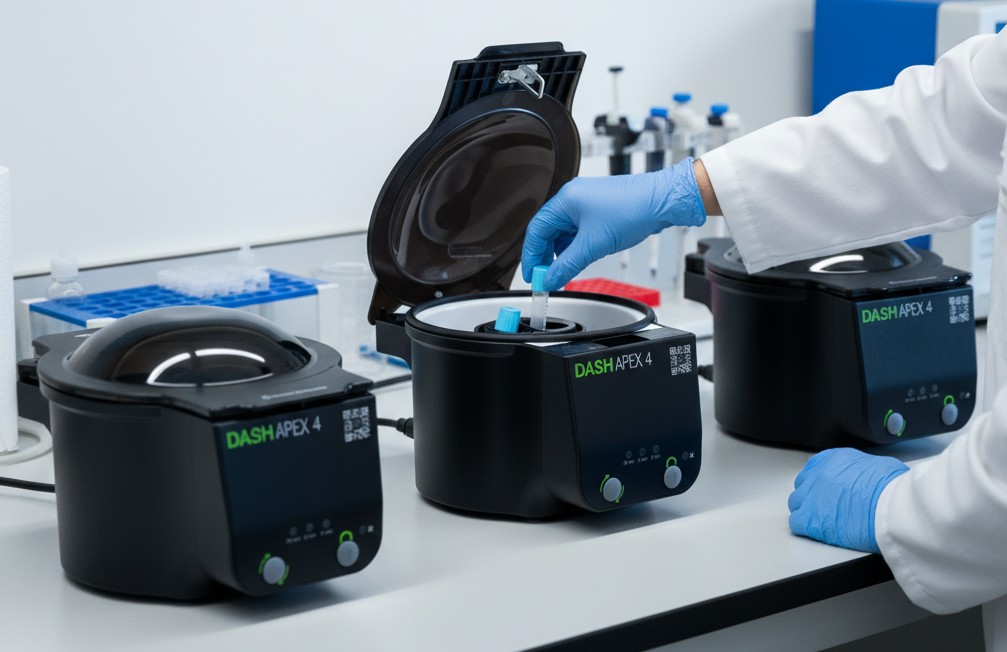
Arranging multiple small centrifuges into an array lets you process samples as they come rather than holding them for a batch. That approach reduces turnaround time and improves cost effectiveness at the same time, which makes it one of the higher-impact changes on this list.
5. Centrifuge in Accessioning
Placing a centrifuge array in or near accessioning changes the geometry of your workflow. The accessioner can spin tubes the moment they arrive and place them directly onto the chemistry analyzer’s STAT line.
That single change eliminates several sources of lost time at once: the multiple trips back and forth to chemistry, the extra handling steps each trip introduces, and the wait time that builds up between stations. Bringing centrifugation to the sample, rather than carrying the sample to centrifugation, tightens the whole process.
6. Reduce Spin Time
Spin times that were standard a decade ago may be longer than your samples actually require. Advances in centrifuge technology now allow for complete separation at higher g-forces over shorter cycles, in line with CLSI GP44-A4 section 5.4.1.1 and tube manufacturers’ instructions for use.
Reviewing your current protocols against these guidelines is worth the effort. Shaving even a few minutes off each spin adds up quickly across a full day of samples, and modern centrifuges are built to deliver clean separation in that shorter window.
Small Changes, Measurable Results
None of these six strategies requires a complete overhaul of how your lab operates. Each one targets a specific point where time tends to slip away, and together they can meaningfully reduce your turnaround time. The labs that consistently hit their TAT goals are usually the ones willing to revisit familiar workflows and ask where the next 20 minutes are hiding.
At Drucker Diagnostics, we manufacture centrifuges and lab solutions to make your lab safer, healthier, and more productive. If you’d like to talk through how an array-based approach or a faster cycle could fit your workflow, our team is here to help. Contact our sales team at 1-866-265-1486 (U.S. only) or [email protected] to learn more.