
How Drucker Helped Bring Centrifugation to the International Space Station
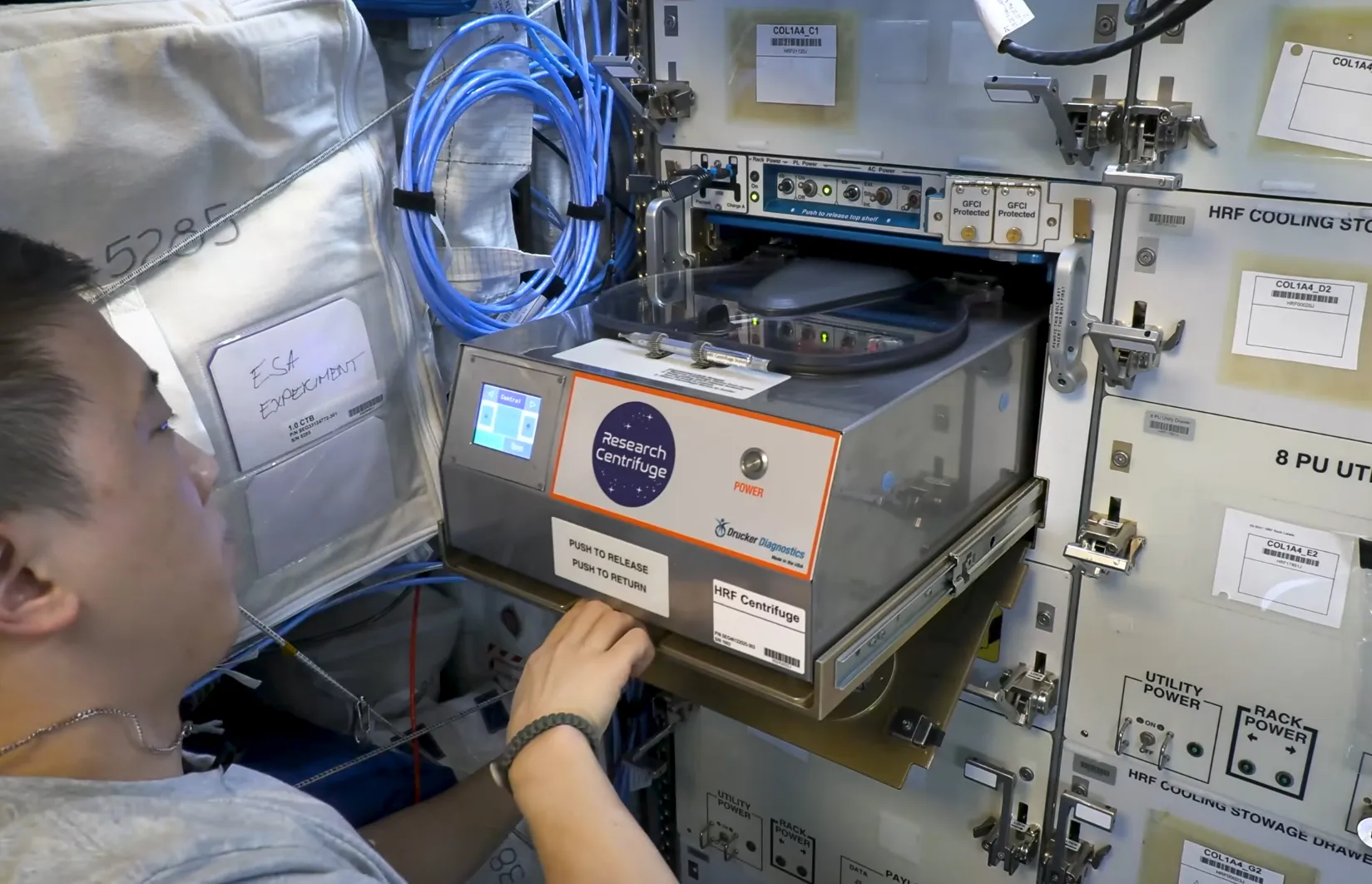
Published March 30, 2026In April 2018, a custom-built Drucker Diagnostics centrifuge left Earth on SpaceX-14 and docked with the International Space Station. Nearly seven years later, it continues to support NASA’s human research mission in orbit.
A Custom Build for a Unique Mission
Drucker’s relationship with NASA’s Johnson Space Center goes back over a decade, when the two organizations first began collaborating on bringing new centrifuge equipment to the ISS. Building a centrifuge for life in orbit required close collaboration, which has defined the project from the very beginning.
The Human Research Facility (HRF) Centrifuge was designed to support NASA’s ongoing study of how the human body responds to microgravity—one of the most important areas of research happening aboard the station as NASA prepares for longer-duration missions to the Moon and Mars. The ISS is being used to study the risks to human health that are inherent in space exploration, including how extended time in space affects the cardiovascular system, bone density, and blood.
Using Drucker’s custom centrifuge, astronauts draw their own blood samples, process them aboard the ISS, and preserve them for analysis back on Earth. It’s mission-critical work that depends on equipment that performs reliably even hundreds of miles above the planet.
The HRF centrifuge holds 6 tube carriers and can process up to 24 blood tubes at once in its swing-bucket rotor. Spin parameters, cycle status, and telemetry data are transmitted to ground control at Johnson Space Center in real time, where the centrifuge can be monitored, configured, and controlled remotely.
An Evolving Need
Years after installation, NASA’s research needs evolved. New processing requirements called for additional stored protocols, lower speed operation options, and telemetry updates.
In the summer of 2024, a NASA contractor reached out to Drucker Diagnostics’ support team with the new requirements. A few months later, the Johnson Space Center provided one of their backup ground units that mirrors the in-flight hardware. The Drucker Diagnostics team used it to develop and test the requested updates, working closely with NASA representatives until every change was approved.
The result is a centrifuge that is better equipped than ever to support NASA’s ongoing research into the long-term effects of spaceflight on the human body.
The Drucker Diagnostics Difference
The ISS project is a strong example of Drucker Diagnostics’ commitment to supporting customers well beyond the initial build. From custom engineering to long-term technical support, Drucker brings the same level of care and responsiveness to every partnership, whether the application is on the ground or in orbit.