
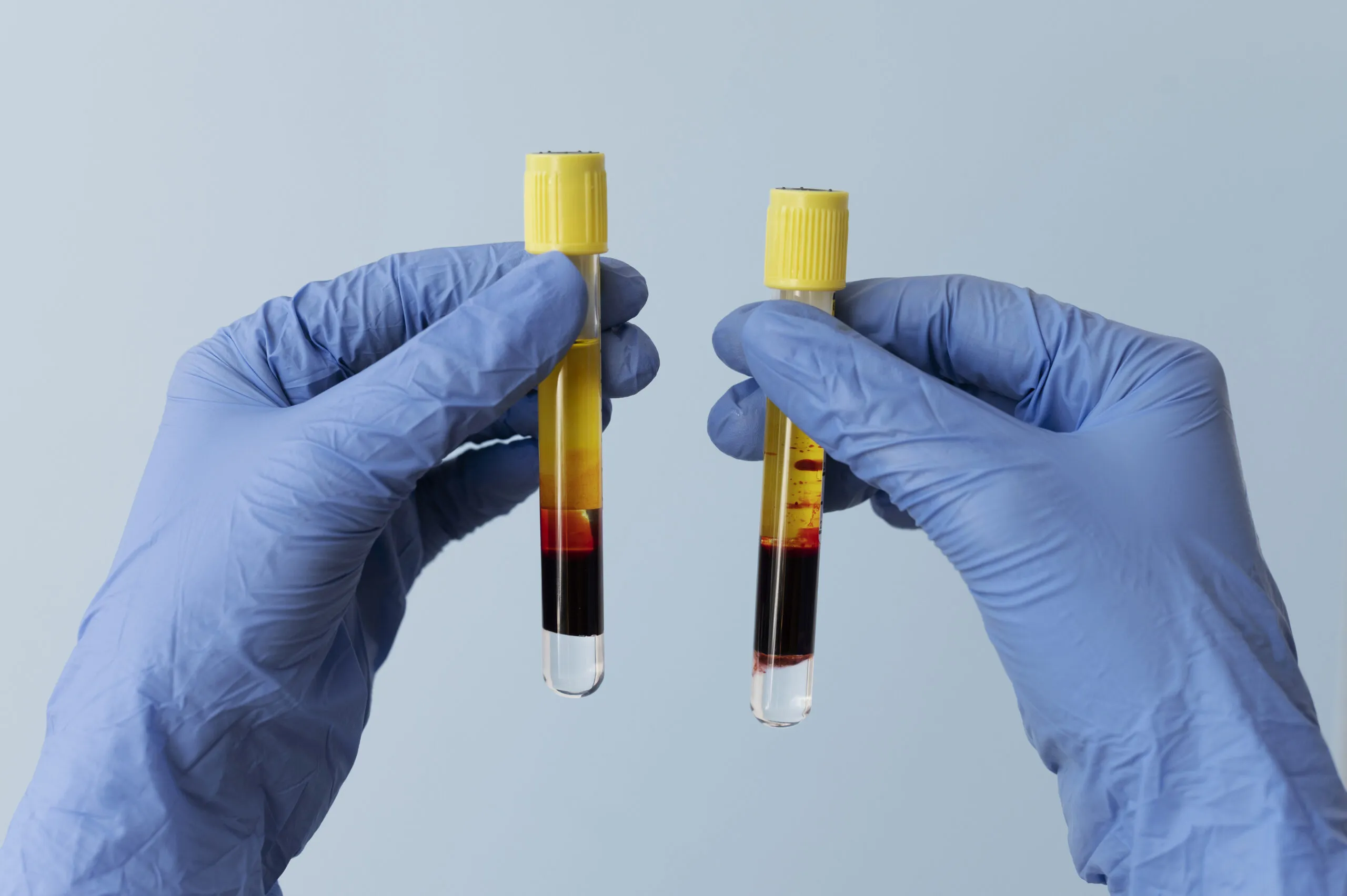
PRP vs PRF: Centrifugation Differences Explained
Published February 19, 2026PRP and PRF both start with the same blood draw, but centrifugation protocols determine their fundamental differences. Spin speed, anticoagulant use, and timing create distinct products with different cell compositions, growth factor release patterns, and clinical applications. Understanding these centrifugation variables helps practitioners choose appropriate equipment and optimize preparation techniques.
TLDR: PRP uses high-speed centrifugation (1500-3000 RPM) with anticoagulant for liquid plasma concentrate. PRF uses low-speed centrifugation (1300-1500 RPM) without anticoagulant, forming fibrin matrix during the spin. Speed differences determine cell composition, growth factor release patterns, and final product structure.
What’s the core centrifugation difference?
PRP Protocol:
- Speed: 1500-3000 RPM (160-400 x g)
- Anticoagulant: Required (ACD-A or citrate)
- Spin type: Usually double-spin
- Duration: 10-15 minutes total
- Result: Liquid platelet concentrate
PRF Protocol:
- Speed: 1300-1500 RPM (130-200 x g)
- Anticoagulant: None
- Spin type: Single-spin only
- Duration: 12-14 minutes
- Result: Fibrin gel with trapped platelets
Without anticoagulant, blood begins clotting during the blood draw. The architecture of the fibrin network depends on centrifugation conditions.. The slower speed allows a more homogeneous distribution of platelets and white blood cells throughout the fibrin network and smaller but more cell‑rich clots. .
How does spin speed affect cell composition?
Higher-speed PRP centrifugation separates blood components cleanly:
- Platelets: 4-7x baseline concentration
- White blood cells: Varies by protocol
- Red blood cells: Complete separation
- Fibrin: Prevented by anticoagulant
Low-speed PRF centrifugation preserves mixed cell population:
- Platelets: 2-3x baseline concentration
- White blood cells: Retained within fibrin network (immune factors intact)
- Red blood cells: Mostly separated during centrifugation, the red blood cells adhered to the bottom of the clot are trimmed
- Fibrin: Forms natural scaffold during spin
The incomplete separation in PRF creates a more complex biological product with sustained-release properties.
Why does growth factor release differ?
PRP’s immediate release: Anticoagulant keeps platelets suspended in liquid plasma. When activated (calcium chloride, thrombin), platelets degranulate rapidly—releasing 70% of growth factors within 10 minutes and 95% within the first hour.
PRF’s sustained release: Fibrin polymerizes during centrifugation, physically trapping platelets in the mesh. Growth factors release gradually over 7-14 days as fibrin naturally degrades.
This explains application preferences: PRP for rapid collagen response (skin rejuvenation, hair restoration), PRF for prolonged healing (post-surgical recovery, volumizing treatments).
What makes PRF preparation more error-prone?
Without anticoagulant, timing becomes critical:
- Blood draw to spin: Must centrifuge within 1-5 minutes (protocol dependent) before natural clotting begins
- Extraction window: 2-10 minutes (protocol dependent) after spin completes before fibrin solidifies completely
- No re-dos: Premature clotting ruins the preparation—requires new blood draw
PRP’s anticoagulant provides a 4-8 hour stability window, allowing batch processing and reducing preparation failures.
Can the same centrifuge handle both protocols?
Yes, if it offers:
Speed range: 1000-3500 RPM minimum
Speed accuracy: ±50 RPM tolerance (critical for PRF’s narrow range)
Programmable settings: Save protocol parameters to reduce operator error
Standard tube compatibility: 10-15ml blood collection tubes
Variable-speed clinical centrifuges eliminate protocol switching complications. Fixed-speed models require separate equipment for each protocol.
What’s the platelet concentration reality?
Studies show consistent ranges:
PRP systems: 4-7x baseline (with proper double-spin protocol)
PRF systems: 1.5-3x baseline (single-spin limitation)
Claims of “10x baseline” for either protocol generally reflect measurement methodology differences or concentrate volume reduction rather than actual platelet density increases.
Higher concentration doesn’t automatically mean better outcomes—treatment goals determine optimal concentration.
Questions about centrifuge requirements for PRP, PRF, or other regenerative protocols? Contact Drucker Diagnostics to discuss variable-speed systems that handle multiple protocols without equipment switching.