
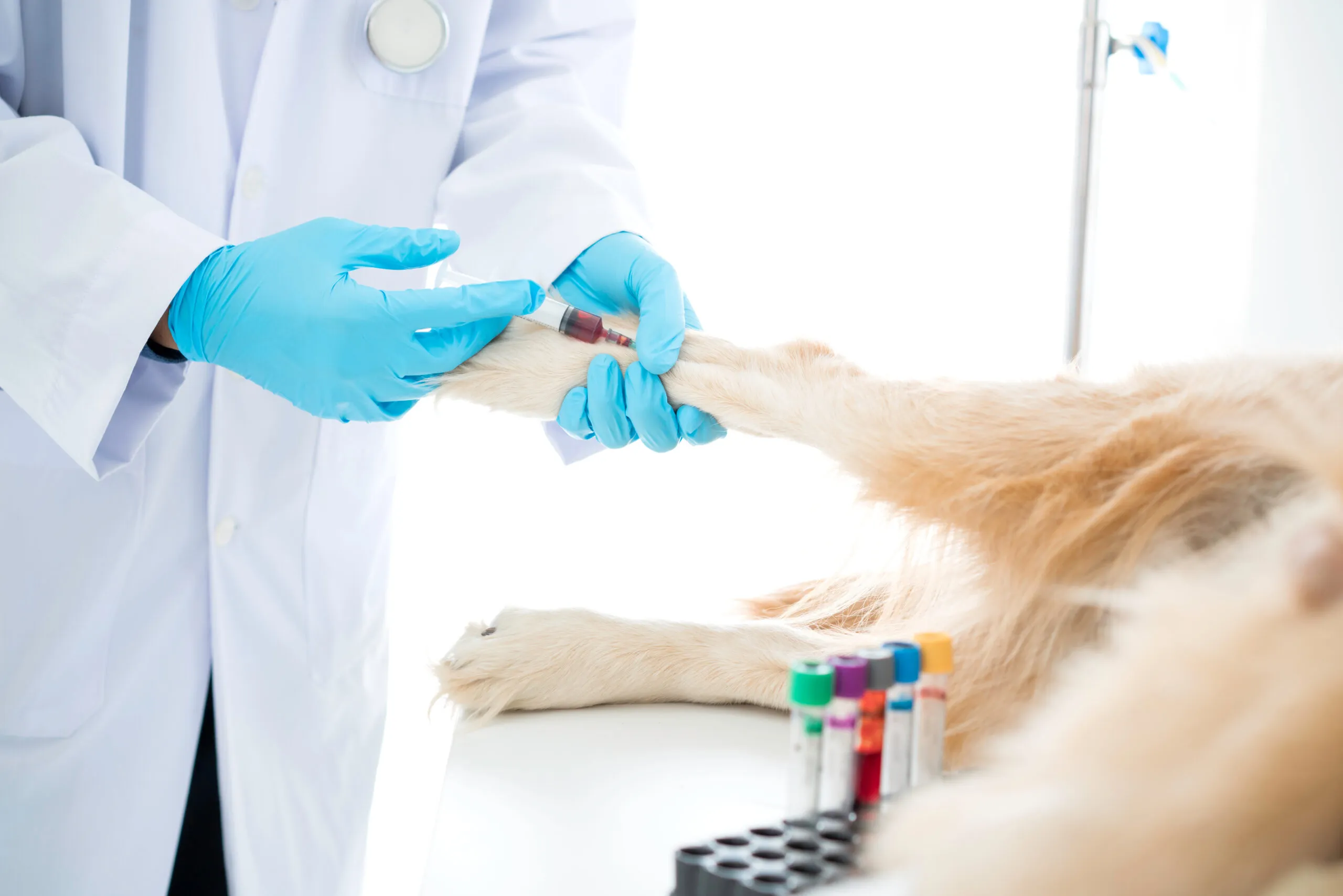
In-House Blood Testing in Veterinary Practices: Equipment and Workflow Guide
Published February 27, 2026Running blood tests in-house lets veterinary practices deliver faster diagnoses, improve patient outcomes, and capture revenue that would otherwise go to reference labs. But the workflow only works when equipment choices match your clinic’s actual volume and staff capabilities.
TLDR:
- Most practices need both chemistry analyzers and centrifuges to process samples efficiently
- Centrifuge selection should match your daily sample volume (5-10 samples vs. 20+ samples)
- Simple, ready-to-use equipment reduces training time and minimizes staff errors
How do you set up an in-house blood testing workflow?
A functional in-house lab requires three core components: sample collection supplies, a centrifuge to separate serum or plasma, and analyzers to run the tests. The centrifuge is often overlooked during setup, but it’s essential—most chemistry and immunoassay panels require separated serum or plasma, not whole blood.
Your workflow determines equipment requirements. High-volume practices running 20+ samples daily need different capacity than clinics processing 5-10 samples. The mistake many practices make is buying equipment based on theoretical capacity rather than actual daily volume.
What blood tests can veterinary practices run in-house?
Chemistry panels (kidney function, liver enzymes, electrolytes) and complete blood counts represent the core of in-house testing. Many practices add thyroid panels, preanesthetic screening, and basic coagulation tests as their volume grows.
The key decision is what to keep in-house versus send out. Tests you run multiple times weekly belong in-house. Tests you run monthly or less should go to reference labs. This isn’t about capability—it’s about economics and reagent expiration dates.
How many samples can you realistically process per day?
Calculate your current send-out volume from the past six months. Most practices overestimate their in-house needs and underestimate their actual volume. A practice sending out 15-20 samples weekly might only run 10-12 in-house initially as clients and doctors adjust to same-day results.
Sample volume determines both analyzer and centrifuge capacity. A clinic processing 5-8 samples daily needs different equipment than a practice running 25+ samples. Industry estimates suggest the average veterinary practice runs 3-5 diagnostic tests per day per doctor (Today’s Veterinary Business), meaning a two-doctor practice processes roughly 6-10 samples daily, with high-volume multi-doctor clinics processing significantly more.
Staff availability matters too. If only one or two people can operate the lab equipment, your practical capacity is lower than equipment specifications suggest.
Do you need a veterinary-specific centrifuge?
No, but you need a centrifuge that works for veterinary sample types. What really matters is rotor capacity (how many tubes), speed range (most vet samples need 3,000-4,000 RPM), and simplicity. Veterinary staff typically aren’t trained lab technicians. Equipment that requires rotor selection, adapter matching, or complex programming creates opportunities for errors.
Ready-to-use centrifuges eliminate the rotor-adapter confusion common in traditional clinical centrifuges. When multiple staff members need to operate equipment, simplicity reduces training time and processing errors.
What’s the difference between serum and plasma in veterinary testing?
Serum comes from blood that’s been allowed to clot, then centrifuged. Plasma comes from blood collected in tubes with anticoagulant (EDTA, heparin), then centrifuged immediately. Plasma still contains clotting factors, like fibrinogen, while serum does not. Most chemistry panels use serum. Most hematology tests use whole blood or plasma.
The practical difference: serum requires a 20-30 minute wait for clotting before centrifugation. Plasma can be centrifuged immediately but requires the correct anticoagulant tube. Using the wrong tube type for your analyzer causes rejected samples and wasted supplies.
Check your analyzer’s requirements before establishing protocols. Some chemistry analyzers accept both serum and plasma; others are serum-only.
How long does sample processing actually take?
Typical timeline: 20-30 minutes for serum clotting, 5-10 minutes for centrifugation, then immediate analyzer processing. Total time from blood draw to results: 35-45 minutes for chemistry panels, faster for tests using plasma or whole blood.
This assumes your centrifuge is available when needed. Practices with single centrifuges sometimes create bottlenecks during busy periods. If you’re running samples from multiple patients simultaneously or processing PRP for regenerative treatments alongside diagnostic samples, one centrifuge may not be enough.
Should you run one centrifuge or multiple units?
Most practices start with one centrifuge and add a second when volume increases or when they add PRP/regenerative medicine services.
A practice processing 15+ diagnostic samples daily plus offering PRP therapies should consider dedicated units. The centrifuge becomes a workflow bottleneck when doctors are waiting to process samples while a PRP preparation runs its 12-minute cycle.
Space constraints are real in veterinary practices. If you’re working with limited counter space, prioritize a compact centrifuge that handles your core volume over a larger unit with capacity you won’t use.
What breaks most often in veterinary lab workflows?
Equipment failures are rare. Process failures are common. The most frequent problems: using wrong tube types, insufficient sample volume, hemolysis from pre-analytical errors during blood collection, rough handling, and samples sitting too long before processing.
Staff training reduces most errors. But equipment complexity introduces new failure points. Centrifuges requiring rotor changes and adapter selection create opportunities for mistakes—especially when multiple staff members operate the equipment across different shifts.
Pre-analytical errors (mistakes before the sample reaches the analyzer) account for 60-70% of lab errors across all medical settings, according to clinical laboratory studies. Simplifying equipment and standardizing protocols reduces this rate.
How do you justify the cost of in-house lab equipment?
Calculate monthly reference lab costs, then factor in improved patient care and client satisfaction. A practice sending out $2,000-3,000 monthly in lab work typically breaks even on equipment costs within 18-24 months.
The financial model improves with volume. Practices running higher sample volumes see faster ROI. But the clinical benefit—same-day results for sick patients—often matters more than pure economics.
Reference labs serve a purpose for specialized tests and overflow capacity. The goal isn’t eliminating send-out work entirely. It’s bringing high-frequency tests in-house where speed matters for patient care.
What should you look for when selecting lab equipment?
Start with your analyzer requirements—chemistry panel needs, test menu, sample volume—then choose a centrifuge that matches your workflow. Most veterinary chemistry analyzers specify minimum sample volumes and serum/plasma requirements.
For centrifuges, prioritize: appropriate speed range (most vet samples: 2,000-4,000 RPM), sufficient capacity for daily volume, footprint that fits your space, and operational simplicity. Equipment that requires extensive training or rotor/adapter matching creates ongoing headaches.
Ask what happens when staff members change or new employees start. If equipment requires complex setup or selection processes, you’re creating training dependencies. Ready-to-use systems with preset programs reduce training time from hours to minutes.
Ready to streamline your in-house lab workflow? Drucker Diagnostics offers veterinary-friendly centrifuges designed for multi-species practices. Our ready-to-use systems eliminate rotor and adapter complexity. Explore our veterinary centrifuge options.